How it works.
Somewhere Else is built around four ideas. This page explains all of them.

A place is somewhere real.The messages live there.
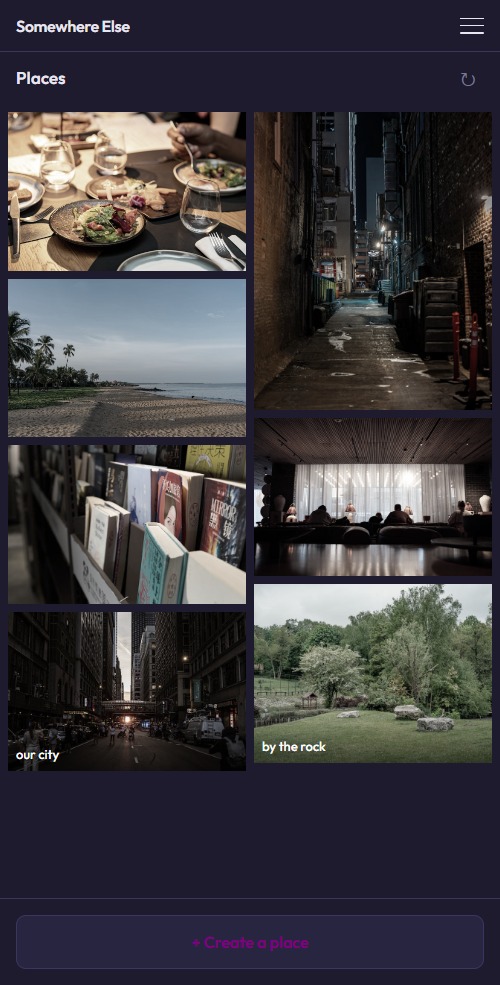
A place in Somewhere Else corresponds to a location in the world — a studio, a kitchen table, a shop floor. You create it, give it a name, and choose a small object that works as the shared key to enter. Knowing the object means you belong.
Places are intentionally small. They have member limits — not because of cost, but because a table seats a few people, not a few hundred. Small groups talk differently. They actually talk.
Messages posted in a place belong to that place. They don’t follow members home, don’t appear in any feed, and don’t land in anyone’s inbox. You check in when you feel like it. The place is always there.
Not a group. Not a channel. A specific somewhere — that only a few know about.
A connection is mutual.So is the exit.
Before you can invite someone to a place, you need a connection with them. Connections are two-way — both people choose to know each other here. You connect via a shared link, a QR code, or through someone already in your world.
This isn’t just a contact list. It’s a small, curated network of people you’ve actively chosen — and who’ve actively chosen you back. You can add someone to a place only if there’s already a connection between you. No one ends up in a room they didn’t know existed.
Your connections are yours to tend. The list doesn’t grow automatically. There are no suggestions, no algorithms recommending strangers.


New messages make room for themselves.
Every place has a window. New messages arrive. Old ones quietly move on. No backlog. No guilt. Just what's here now.
Nobody decides what gets displaced. It just moves on. This is intentional — we’re not building archives, we’re building presence. When you open a place, you see what’s current, not everything that ever happened.
You can scroll up within your session. But when you come back tomorrow, the thread may have shifted. That’s not a bug. That’s the point.
Add a screenshot
in block settings.
Write. Send.Let it breathe.
Open a place. Tap to write. Send. That’s most of it. No algorithm decides when people see it. No read receipt tells you whether they did.